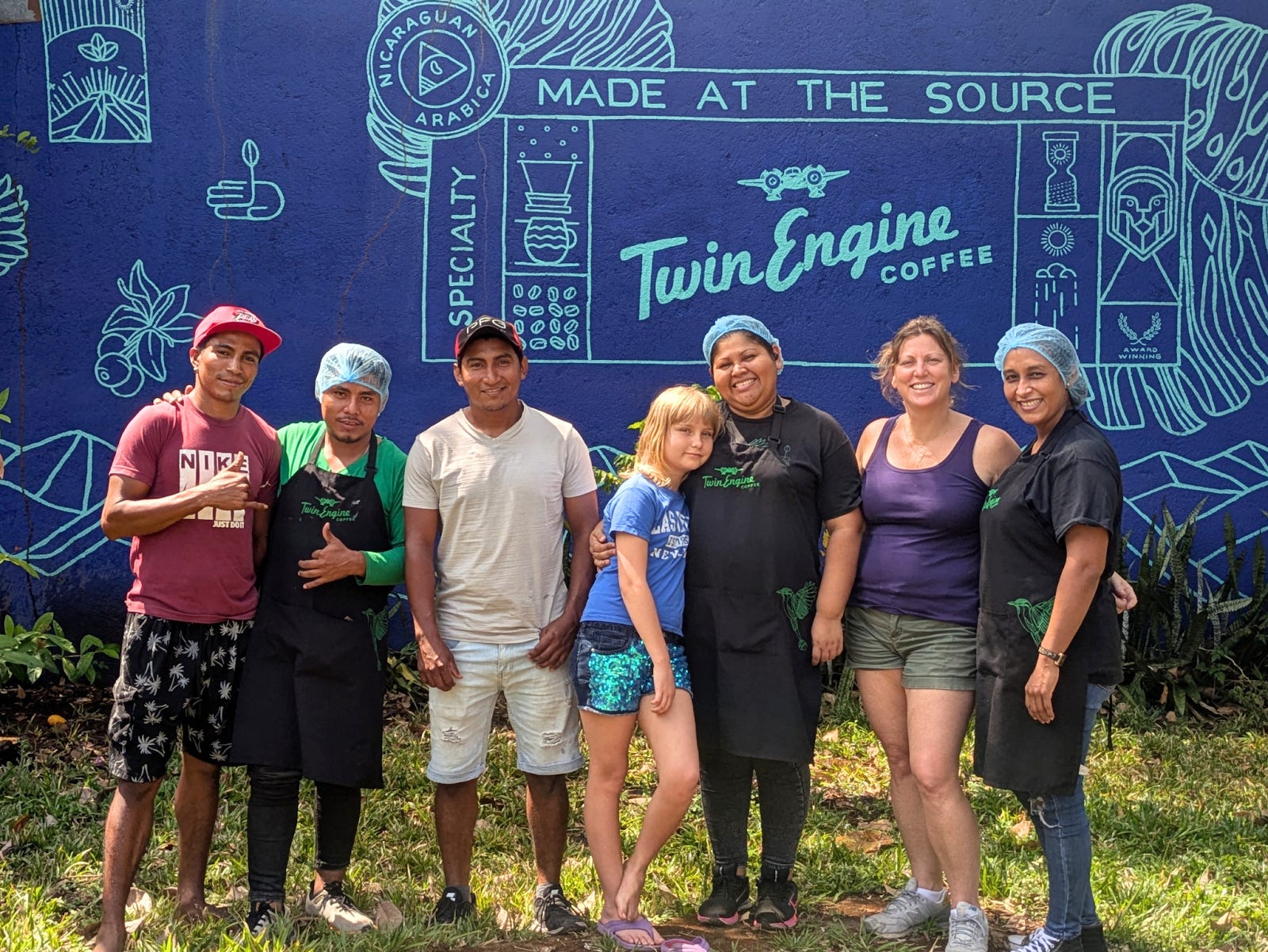
Should we be “at-the-source-a-vores” when we choose our coffee?
Reflections from a visit to Twin Engine Coffee in León, Nicaragua

Last week I visited a long-time friend, Andrea Woolverton, at her home on the coast of Nicaragua. Andrea is the co-owner, with her husband Colin, of Twin Engine Coffee. It would be easy to make this post an advertisement for what I think is a really great coffee company. But…since that isn’t quite what our space here at The Aggregate is for, I will instead share some reflections on how their coffee enterprise may fit within the Agroecology framework. (and then of course tell you at the end how you can buy some, because it's also delicious).
Twin Engine’s coffee is not only grown in Nicaragua, it is sorted, cleaned, fermented, dried, hulled, roasted and packaged in Nicaragua. Because each of these steps are carried out in the country, jobs are created and sustained. And, knowledge about coffee and how it is grown and processed, about what determines quality- is created and shared. And because the founders believe in the value of offering stable and quality employment so that their business can succeed, the jobs are good jobs.
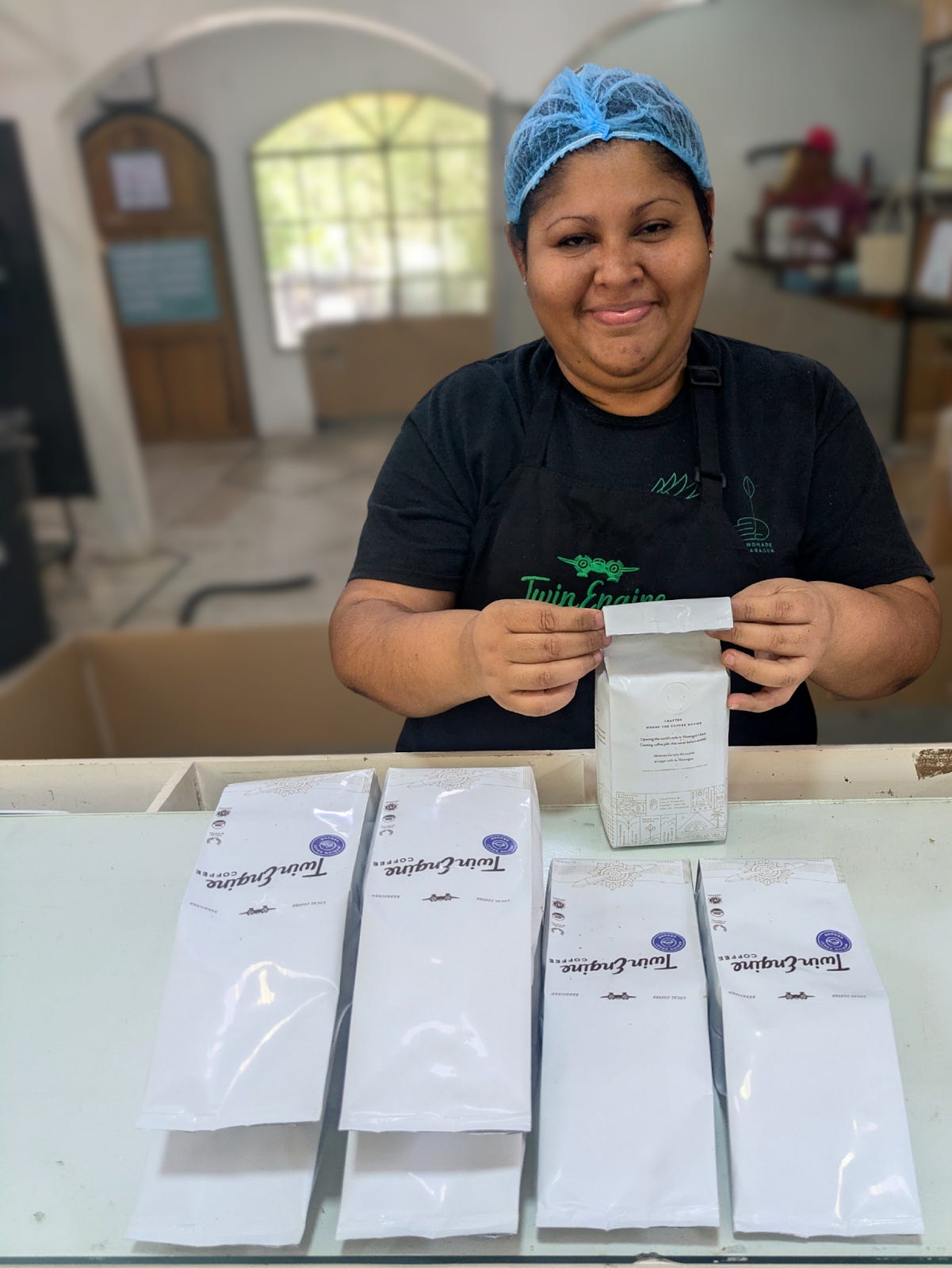
Thinking back to our working definition of Agroecology from our very first post, this makes me think of this principle: “Movement: our food systems shift towards more equitable distribution of resources, benefits and power”.
I personally think this is a great example of exactly that type of movement. The majority, close to 100% in fact, of coffee is grown in places where most wages are low, good quality employment is scarce, and infrastructure, services and education are unreliable. This may sound familiar, similar extractive economies exist with other cash crops such as cacao, tea and tobacco.
Shifting more of the benefits of the coffee business to these places is more equitable.
Yet, when we drink our coffee each day, most of us don’t spend much time thinking about this. We may know where our coffee originated, and we may also know who roasted it. If we fixate on supporting local businesses (I often fall in this category), we may be content to know that our coffee was roasted locally. Perhaps it was roasted by a small and hip roaster nearby, who also has good intentions, and probably eye-catching packaging. And, they are not necessarily at fault for the major power imbalances of the global coffee trade. But, I think companies like Twin Engine illustrate that we can do better.
To add some numbers here: when coffee is roasted where it is grown, about 80% of the retail price stays in the local economy. When it is exported and roasted elsewhere, only 10-15% stays. That is significantly better. In fact, it’s about 400% better! (for anyone trying to check the math (80-15/15)*100)
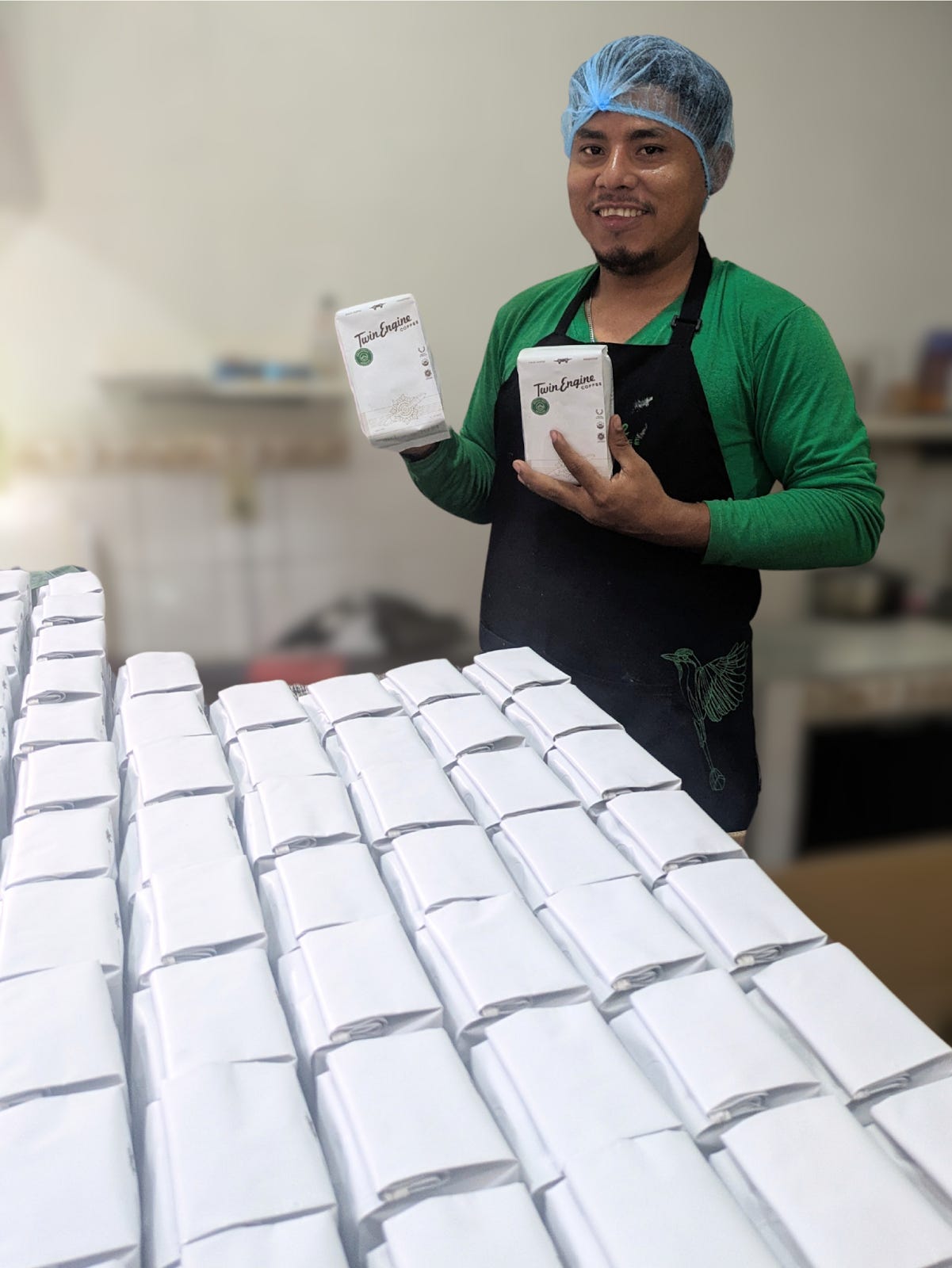
What they are doing isn’t particularly easy. They are going against the norm of exporting green coffee, and therefore much of the infrastructure and expertise that they need to process and ship coffee directly from Nicaragua wasn’t there. So they have had to create it - turning rented spaces into climate controlled storage rooms to battle the local heat and humidity and retrofitting gas barbecue grills to become portable roasters that work through power outages. And while Andrea and Colin bring management as well as tasting skills, it takes more than two people to run this type of company. They have trained staff in roles as varied as understanding and following detailed international standards such as those required for USDA organic certification, to creating the art for their packaging.
And where do they find shipping boxes? Companies like Uline and Amazon don’t exist for small businesses in countries like Nicaragua. So Twin Engine Coffee must find the resources to behave like big businesses do…buying thousands of shipping boxes at a time.
Adding to that, Andrea and Colin are from the United States, and through the twelve years of running their business, they have had to learn, and re-learn, the regulations and hidden “rules” that they need to know to be able to operate in Nicaragua as well as the United States.
If more coffee was fully crafted in the source country, perhaps some of this would be a bit easier?
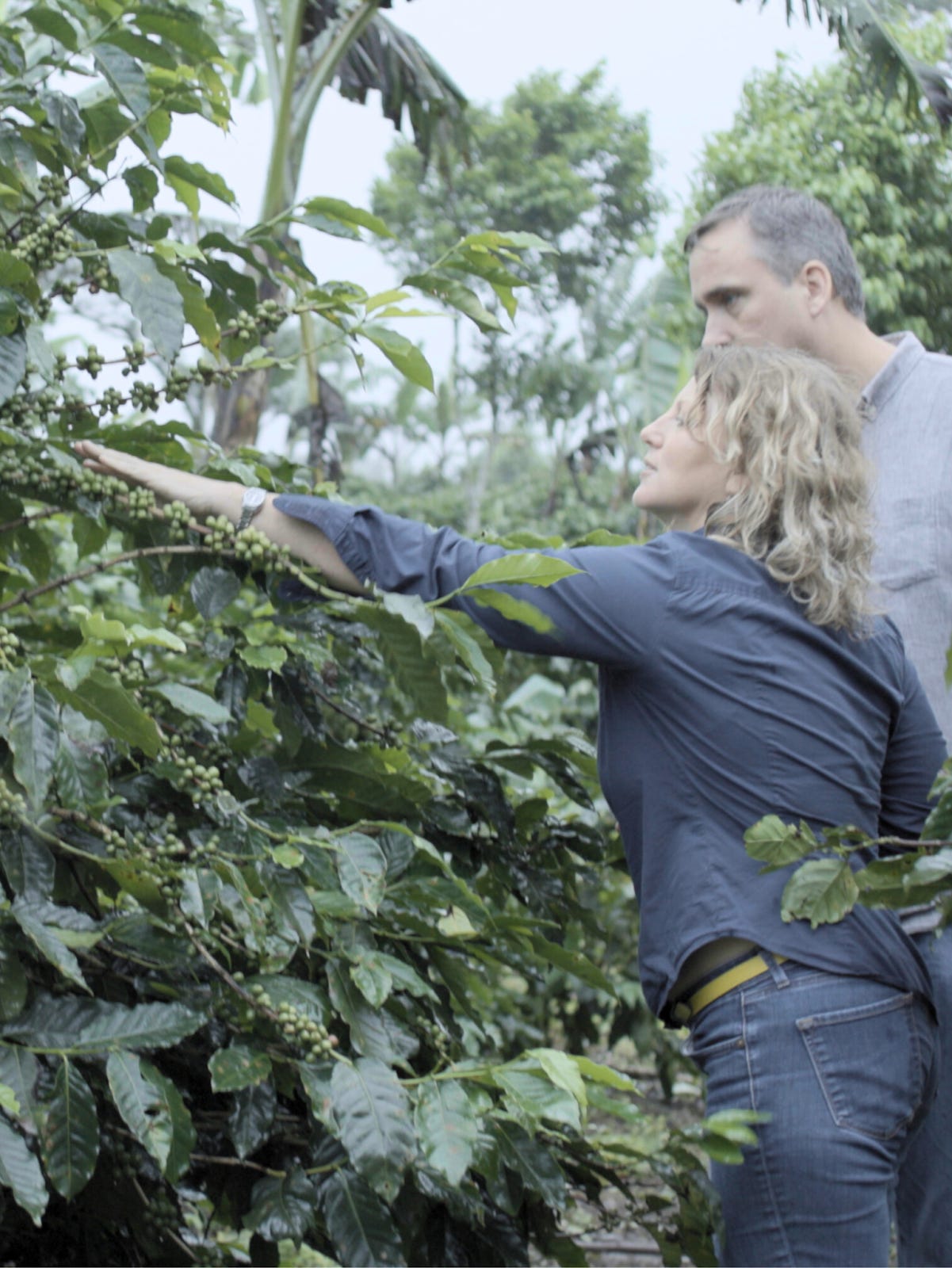
Thinking about the other agroecological principles, I asked Andrea how she thinks Twin Engine’s model may also reflect this agroecology concept: Practice: food is produced in a way that utilizes ecological principles, and respects, protects and, where possible, benefits the surrounding environment while producing stable harvests and incomes for farm owners.
She explained to me that higher quality coffee beans are denser. The beans are allowed to grow more slowly at cooler temperatures, in higher elevations within a jungle shade system (tall old growth trees and movable shade like plantains–which also provide food). Healthier soils support healthier coffee plants, shade trees moderate temperatures, and biodiversity can help with pollination and natural pest regulation. Coffee farmers who are producing premium coffee know this. They do everything they can to maintain a healthy ecosystem on and around their farm, and value biodiversity for the benefits it brings to their production. We may see a post all about this from Andrea in the future, if she can fit a little writing into her schedule.
When the full coffee production process is completed in the country, this information doesn’t just stay with the coffee farmers - the staff of Twin Engine end up understanding this as well. They appreciate it when they drink their morning coffee, and they talk to their family and friends about it. The idea of “respect for the surrounding environment” is tangible and important.


What do you think about this business model? Do you know any other businesses doing something similar?
Is coffee a product for which us “locavores” should consider becoming… “at-the-source-a-vores”, or “shift-the-power-a-vores” instead? And what about that chocolate bar…?
(And, as promised, if you’d like to order, head over to Twin Engine’s website, you’ll find options for single orders, subscriptions, sampler packs…)